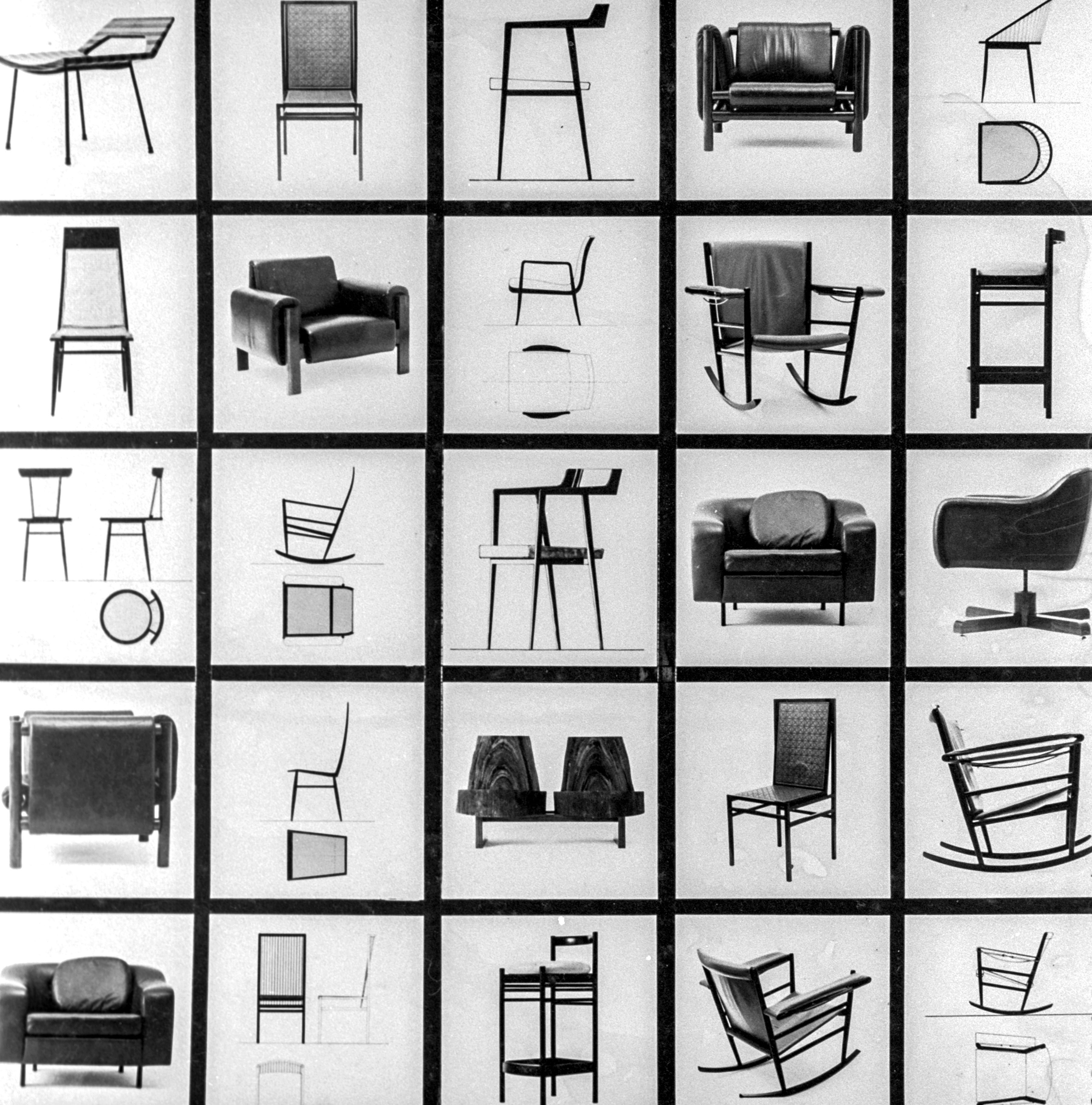
When people talk about Brazilian modern design, one name always comes up: Joaquim Tenreiro. Born in 1906 in Melo, Portugal, Tenreiro came to Brazil as a young man and, by the 1940s, was already reshaping the way Brazilians thought about furniture.
At first, his story looked like many others: immigrant family, studies in arts and crafts, and early jobs in furniture workshops. But Tenreiro had something that set him apart — a keen eye for proportion and an ability to transform heavy, old-world styles into something lighter and more in tune with modern living.
During the 1930s, he worked at Laubisch & Hirth, a well-known furniture and interior decoration firm. There, he learned how to design for demanding clients, coordinate teams, and dive deep into the details of execution. This experience prepared him for the big leap he would take in the 1940s.
That leap came in 1942 with the creation of his Poltrona Leve, a chair that looked nothing like the traditional furniture of the time. Made in pau marfim wood, it was slimmer, simpler, and more elegant than the ornate pieces people were used to. Around the same time, Tenreiro also worked on commissions for important figures like Oswaldo Aranha, subtly convincing clients to accept cleaner lines and lighter designs.
But the turning point was 1947, when he opened his own business, Langenbach & Tenreiro Ltda, in Rio de Janeiro. Half of the store’s offer was still English-style furniture (a concession to his partner), but within the first weeks all the modern pieces had sold out — proof that the public was ready for a new kind of design. Tenreiro never looked back.
From that point on, his studio became a hub of innovation. He created some of his most iconic pieces, like the Estrutural chair (1947), with its delicate yet strong frame, and the rocking chairs that combined jacarandá wood with natural cane or upholstery. His work balanced elegance and comfort in a way that felt entirely Brazilian: tropical woods, airy proportions, and a refusal of excess.
By the early 1950s, Tenreiro expanded with a store in São Paulo, including one in the Conjunto Nacional on Avenida Paulista, and opened a second workshop in Bonsucesso to keep up with demand. His stores weren’t just places to buy furniture — they were cultural spaces, where paintings, sculptures, and decorative objects were exhibited alongside his designs.
After years of producing some of the most important furniture in Brazil, Tenreiro eventually closed his workshops and dedicated himself fully to art. But by then, his legacy was already secured.
Today, Joaquim Tenreiro is remembered not just as a pioneer but as a true master of modern Brazilian furniture. He showed that design could be light, elegant, and perfectly adapted to the way Brazilians live — setting the stage for an entire generation of designers who followed.
For collectors, his key period is the late 1940s to the 1950s, when he designed iconic pieces like the Poltrona Leve, the Estrutural chair, and his famous rocking chairs. These works combined craftsmanship with simplicity — furniture that was practical yet sculptural.
What makes Tenreiro especially attractive in the market is that his production was relatively limited. His stores in Rio and São Paulo were successful, but they were never about mass production. Add to that the fact that many of his pieces were customized for private clients, and you end up with a body of work that’s rare, distinctive, and highly collectible.
Today, Tenreiro’s chairs, tables, and rocking chairs regularly appear in auctions and specialized galleries, often reaching international buyers. For anyone building a collection of Brazilian design, a Tenreiro piece is a cornerstone — both for its historical importance and for its timeless beauty.
 Varela Advisory